

Blog
Variable Speed Motor Control Helps Factories Rethink Industrial Energy Use

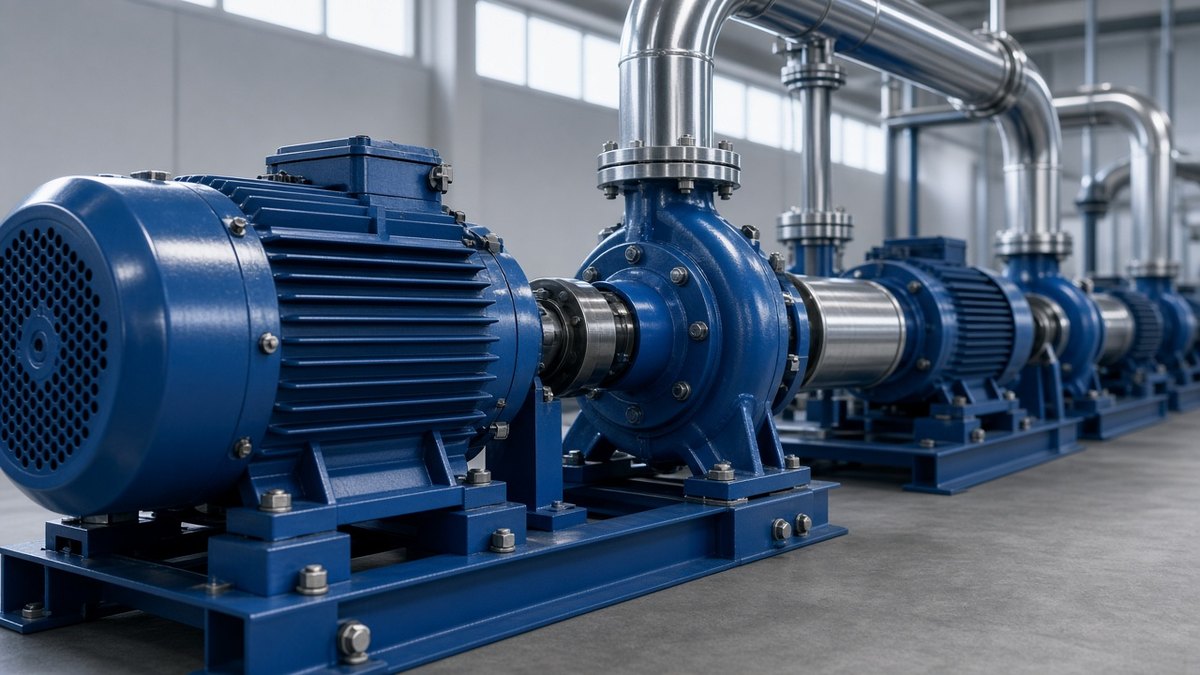
Electric Motors at the Heart of Industrial Energy Demand
Electric motors power an enormous range of industrial equipment, from pumps and fans to compressors, conveyors and mixers. In many facilities they account for the majority of electricity consumption, quietly running for long hours in the background of daily operations. For years, a large share of these motors operated at fixed speed, regardless of the actual demand placed on the process. Flow was controlled by throttling valves, adjusting dampers or simply switching equipment on and off. These methods are simple, but they waste a considerable amount of energy because the motor continues to work at full speed even when the process requires much less. As energy costs and sustainability expectations receive greater attention, plant managers are taking a closer look at how their motors are controlled. Variable speed technology has emerged as a highly practical tool. By adjusting motor speed to match real demand, these systems can significantly reduce energy use, lower mechanical stress and improve process control. The idea is not new, yet adoption continues to expand as equipment becomes more compact, easier to configure and more affordable, making it accessible to facilities of almost every size and type.
How Variable Speed Control Saves Energy
The energy savings associated with variable speed drives come from a simple principle. For centrifugal loads such as pumps and fans, the power required falls sharply as speed decreases. Even a modest reduction in speed can lead to a substantial drop in energy consumption. When a fan or pump is controlled by throttling, the motor continues to draw nearly full power while the excess energy is lost across a valve or damper. With variable speed control, the motor itself slows down, delivering only the flow or pressure that the process needs. This approach also reduces heat generation in the motor and the surrounding equipment. Beyond centrifugal applications, variable speed drives bring benefits to conveyors, extruders, mixers and many other machines. Soft starting reduces the inrush current that occurs when motors start directly across the line, easing stress on the electrical supply and mechanical components. Controlled acceleration and deceleration protect belts, gearboxes and couplings. In processes where demand changes throughout the day, the ability to follow load variations smoothly can produce meaningful savings over time. These combined effects explain why variable speed control is frequently among the earliest measures considered in industrial energy efficiency programs.
Improving Process Quality and Equipment Life
While energy savings often attract the most attention, variable speed control also improves process performance. Precise speed adjustment allows operators to fine tune production conditions, maintain consistent pressure or flow and respond quickly to changing requirements. In water treatment, for example, pumps can maintain steady pressure across a network rather than cycling on and off. In ventilation systems, fans can adjust airflow to match occupancy or process heat, creating more stable conditions. Manufacturing lines benefit from smoother speed transitions that protect delicate products and reduce waste. Equipment life is another important advantage. Motors that start softly and run at appropriate speeds experience less mechanical shock and lower thermal stress. Bearings, belts, couplings and pipework all benefit from reduced vibration and pressure surges. Maintenance intervals can often be extended, and unexpected failures become less frequent. Modern drives also provide built-in protection functions that guard against overload, overvoltage, phase loss and overheating. Diagnostic information helps maintenance teams understand how equipment is performing and identify developing issues before they cause stoppages. Taken together, these benefits make variable speed control a valuable investment in reliability as well as efficiency, supporting both production quality and long term asset health.
Practical Considerations for Successful Installation
Achieving the full benefit of variable speed technology requires careful planning. Engineers begin by assessing the load profile of each application to determine whether speed control will deliver meaningful savings. Applications with constant full load demand may gain less, while those with variable demand often show strong returns. Correct drive sizing is essential, taking into account motor ratings, overload requirements and ambient conditions. Installation practices also matter. Drives generate heat and must be mounted in cabinets with adequate ventilation or cooling. Electromagnetic compatibility deserves attention, since fast switching electronics can create interference that affects nearby equipment. Proper cable selection, grounding and the use of filters help maintain a clean electrical environment. Motor compatibility should be checked as well, particularly for older motors whose insulation may not be designed for drive operation. Commissioning is the final step, where parameters are set to match the motor and the process. Many drives offer application presets that simplify setup for pumps, fans and conveyors. Documenting settings and keeping parameter backups ensures that a replacement drive can be configured quickly if a failure occurs. Attention to these details turns a simple equipment purchase into a dependable, efficient long term solution.
Retrofitting Existing Facilities
A large share of the opportunity for energy savings lies in existing facilities rather than new construction. Many plants still operate motors that were installed with fixed speed starters, and retrofitting these systems with variable speed drives can deliver attractive returns. Retrofit projects typically begin with an energy survey that identifies the motors with the highest consumption and the greatest potential for savings. Pumps and fans used in cooling systems, ventilation, water supply and process circulation are common candidates. Because a drive can usually be added without replacing the motor or the driven equipment, retrofits can often be completed during short maintenance stops. In some cases, existing starters and contactors remain in place as part of the control circuit, while the drive takes over speed regulation. Retrofitting also offers an opportunity to improve monitoring and control, as drives can communicate operating data to plant control systems. This visibility helps managers verify savings and identify further improvements. Facility operators who approach retrofits step by step, starting with the most promising applications, can build a strong case for continued investment. Each successful project provides practical experience and measurable results that support decisions about the next phase of improvement.
Verifying Savings and Building Support
Energy projects gain lasting support when their results can be demonstrated clearly. Before installing a drive, many facilities record baseline consumption using portable meters or existing monitoring systems. After commissioning, the same measurements are repeated under comparable operating conditions. The difference provides a credible picture of savings that managers and finance teams can trust. Drives themselves often display energy data, which simplifies ongoing tracking and helps operators notice when consumption begins to drift. Sharing these results across the organization encourages other departments to propose their own improvement ideas. It also helps maintenance teams secure resources for further retrofits, spare drives and training. Verification turns energy efficiency from a general aspiration into a practical, measurable program that delivers visible value and keeps attention focused on continuous improvement across the whole site.
A Lasting Role in Sustainable Operations
As industries pursue more sustainable operations, variable speed motor control is likely to remain a central tool. It offers a rare combination of benefits: lower energy consumption, improved process control, reduced mechanical wear and better visibility into equipment performance. These advantages align closely with the goals of plant managers, maintenance teams and corporate sustainability programs alike. The technology also supports broader efficiency strategies, working alongside high efficiency motors, optimized pump and fan selection and improved system design. Together these measures can reshape how facilities use electricity. For maintenance and engineering teams, the growing installed base of drives also means new responsibilities. Keeping spare drives or critical components available, maintaining cooling fans and monitoring operating conditions help ensure that efficiency gains are not lost through unexpected failures. Training technicians to configure and troubleshoot drives builds internal capability and reduces reliance on outside support. Looking ahead, demand for reliable motor control solutions will continue across manufacturing, water management, building services and process industries. Facilities that embrace variable speed technology thoughtfully, with attention to planning, installation and maintenance, will be well positioned to reduce costs and operate more responsibly in a changing energy landscape.