

Blog
Low-Voltage Switching and Protection Upgrades Improve Safety in Control Panels

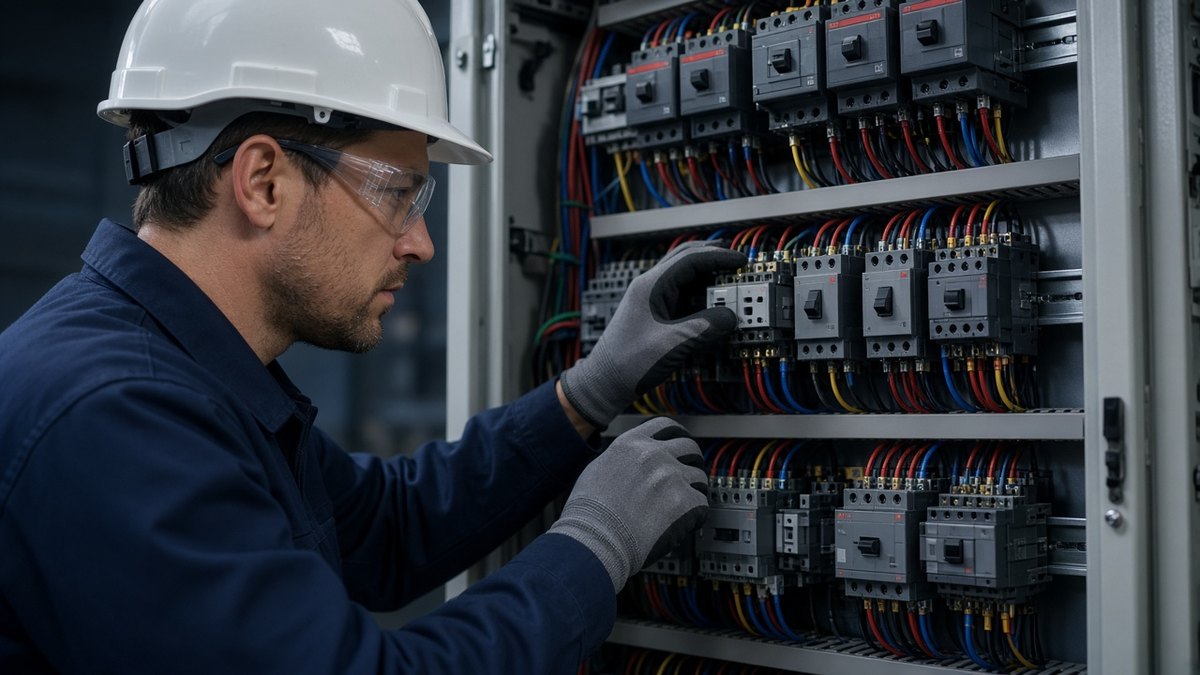
Safety Starts Inside the Control Panel
Behind every motor, heater and machine in an industrial facility stands a control panel filled with switching and protection devices. Circuit breakers, contactors, overload relays, motor starters and fuses work together to switch loads on and off and to protect equipment and people from electrical faults. These devices often operate quietly for years, which can make them easy to overlook. Yet their condition has a direct impact on safety and reliability. A contactor with worn contacts may overheat or fail to open properly. A protection device that has not been tested or correctly set may not respond when a fault occurs. As facilities age and loads change, panels that were once well designed may no longer provide adequate protection. Many operators are therefore reviewing their low-voltage installations with fresh eyes. They are asking whether existing devices are still suitable for current loads, whether settings are correct and whether components have reached the end of their reliable service life. This renewed attention reflects a broader recognition that electrical safety is not a design task that ends at commissioning, but an ongoing responsibility throughout the life of every installation.
The Role of Contactors and Motor Starters
Contactors and motor starters are among the most frequently operated components in industrial panels. They switch motors, pumps, fans, compressors and heating elements, sometimes many times per hour. Each operation causes a small amount of contact wear, and over time this wear accumulates. Contacts may become pitted or eroded, increasing resistance and generating heat. Mechanical parts can wear, and coils may weaken due to age or voltage fluctuations. If a contactor fails to close, equipment stops unexpectedly. If it fails to open, equipment may continue running when it should stop, creating a potentially dangerous situation. Selecting the right contactor for each application is essential. Load type, switching frequency and operating voltage all influence the appropriate rating. Motor starters that combine switching with overload protection help prevent motor damage caused by excessive current. Regular inspection of contactors, including checking for discoloration, unusual noise and loose connections, helps identify problems early. Replacing worn devices proactively, rather than waiting for failure, is a simple yet effective way to improve reliability and safety. Keeping spare contactors and coils for critical applications enables quick recovery when replacements are needed.
Circuit Protection That Matches Real Conditions
Circuit breakers and overload relays are designed to interrupt current when faults or overloads occur. Their effectiveness depends on correct selection and setting. Over the life of a facility, equipment may be added, removed or modified, changing the loads that circuits must carry. Protection devices that were appropriate for the original design may no longer match actual conditions. Settings that are too high may fail to protect equipment, while settings that are too low may cause nuisance tripping that disrupts production. Coordination between protection devices is also important. In a well coordinated system, only the device closest to a fault trips, leaving the rest of the installation in operation. Poor coordination can cause wider outages than necessary. Many facilities are reviewing their protection schemes to ensure they reflect current loads and operating practices. Modern protection devices often offer adjustable settings and diagnostic features that simplify this task. Residual current protection and arc fault detection add further layers of safety where appropriate. By aligning circuit protection with real operating conditions, facility operators can protect both equipment and personnel more effectively while maintaining the continuity of production operations.
Standards and Compliance Drive Improvements
Electrical standards and safety regulations continue to evolve, reflecting new knowledge and changing industrial practices. Requirements for panel construction, short circuit ratings, protection against electric shock and documentation have become more detailed over time. Facilities that were compliant when built may need updates to meet current expectations, especially when panels are modified or extended. Insurance providers and customers may also ask for evidence of compliance. As a result, many operators are conducting assessments of their control panels to identify gaps. These assessments examine whether devices carry appropriate ratings, whether panels are properly labeled, whether wiring follows recognized practices and whether documentation is accurate. Where shortcomings are found, upgrades may involve replacing outdated devices, adding protection, improving segregation or updating drawings. Working with qualified professionals ensures that changes are carried out correctly. Compliance is not only about meeting formal requirements. It also provides a structured framework for improving safety and reliability. Panels built and maintained according to recognized standards are easier to inspect, safer to work on and more dependable in service, creating benefits that extend well beyond regulatory approval.
Modular Design Simplifies Maintenance
Modern low-voltage components increasingly follow modular design principles that make installation, maintenance and replacement easier. Devices mounted on standard rails, with plug-in accessories and clearly marked terminals, can be replaced quickly with minimal disruption. Auxiliary contacts, timers, surge suppressors and interlocks can be added to contactors as separate modules, allowing panels to be adapted without major rewiring. Spring-clamp and push-in terminal technologies reduce wiring time and help maintain consistent connection quality, while screw terminals remain common where users prefer them. Modular design also supports standardization. When facilities use consistent families of components across many panels, technicians become familiar with their features, and spare parts inventories can be simplified. Training becomes more effective, and troubleshooting is faster because procedures are consistent. For older panels, modernization can often be carried out gradually, replacing individual devices with modular equivalents as they reach the end of their service life. This approach spreads costs over time and avoids major shutdowns. Over the long term, modular design contributes to safer, more maintainable installations that support both everyday reliability and future expansion of industrial facilities.
Training and Safe Working Practices
Even the best equipment cannot ensure safety on its own. People who design, install, operate and maintain control panels must understand the hazards involved and follow safe working practices. Electrical work requires proper isolation, verification that circuits are de-energized, use of appropriate protective equipment and adherence to established procedures. Training programs help technicians recognize risks such as arc flash, stored energy and incorrect isolation. Clear labeling of panels, circuits and devices supports safe work by making it easier to identify the correct isolation points. Up-to-date drawings are essential, since outdated documentation can mislead technicians and create dangerous situations. Many facilities are investing in refresher training and updating their procedures as part of broader safety programs. Encouraging a culture where technicians feel comfortable raising concerns and stopping work when conditions are unsafe further reduces risk. Maintenance planning also contributes to safety, as scheduled work allows time for proper preparation rather than rushed repairs under pressure. When skilled people work with well designed equipment and clear procedures, the result is a safer workplace and more reliable operations for everyone in the facility.
Building Safer and More Reliable Facilities
The renewed focus on low-voltage switching and protection reflects a clear understanding that safety and reliability go hand in hand. Well chosen, correctly set and properly maintained devices protect people, prevent equipment damage and keep production running. Facility operators who review their panels regularly, replace worn components proactively and keep documentation current can avoid many of the incidents that lead to injuries, fires and costly downtime. Upgrades do not always require major investment. Often, targeted replacement of aging contactors, adjustment of protection settings and improvements in labeling and documentation deliver significant benefits. Reliable access to quality replacement components supports these efforts, allowing maintenance teams to act promptly when issues are discovered. As industrial facilities continue to evolve, with new equipment and changing loads, control panels must evolve with them. Treating the electrical installation as a living system that requires ongoing attention is the key to long term success. By investing in sound switching and protection practices today, operators lay the foundation for safer workplaces, more dependable production and greater confidence in the electrical systems that power their operations every day.